

ICE and OKX Put Tokenized Stocks on a Regulated-Market Track
Intercontinental Exchange and OKX formed a 50-50 venture that plans to seek U.S. broker-dealer and futures-merchant status, giving OKX users a possible route into ICE futures and NYSE tokenized equities. The practical market question is whether tokenized stocks become a regulated extension of existing exchange plumbing or remain a parallel crypto-market product with unresolved compliance, custody and investor-protection questions.
Verified by Kevin Jenkins
Editor reviewed
Signed off by Kevin Jenkins on . AI-assisted tools may have supported the workflow; source quality and factual claims are reviewed as part of editorial control.
Editorial standards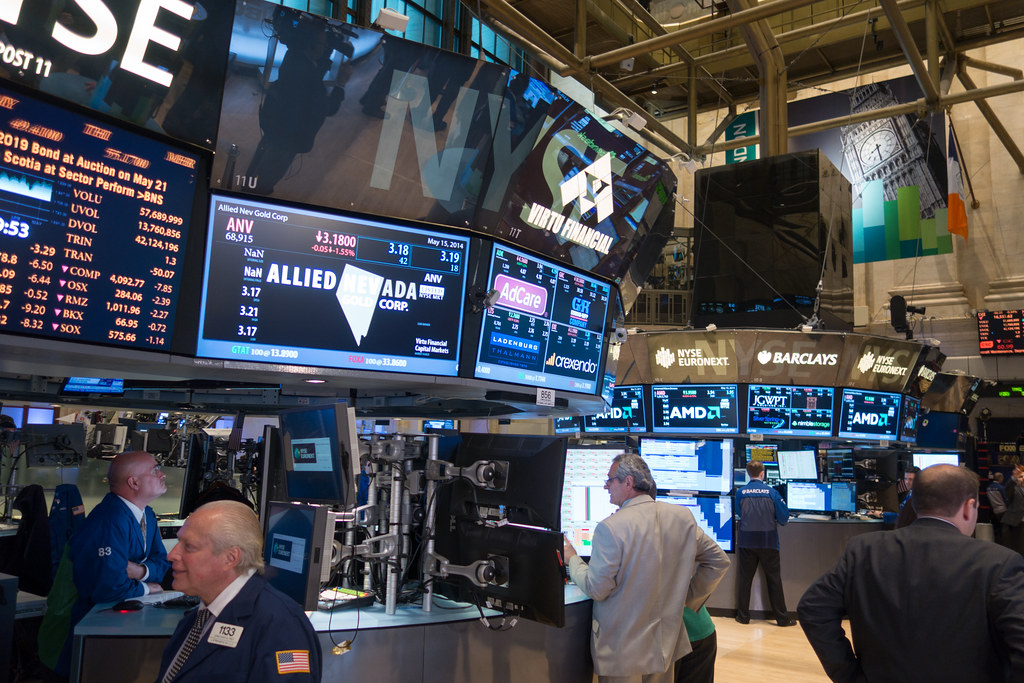
Why it matters
Intercontinental Exchange and OKX formed a 50-50 venture that plans to seek U.S. broker-dealer and futures-merchant status, giving OKX users a possible route into ICE futures and NYSE tokenized equities. The practical market question is whether tokenized stocks become a regulated extension of existing exchange plumbing or remain a parallel crypto-market product with unresolved compliance, custody and investor-protection questions.
Intercontinental Exchange and OKX said Monday they formed a 50-50 joint venture that is expected, subject to regulatory approvals, to operate as a U.S. registered broker-dealer and futures commission merchant. The venture would give OKX customers in the United States and overseas a possible route into ICE futures and NYSE tokenized equities, making the announcement a test of whether tokenized securities can move through regulated exchange infrastructure rather than sit only inside crypto-native markets.
The development matters for exchanges, brokerages, crypto platforms and active investors because the next fight in tokenized markets is less about whether stocks can be represented on-chain and more about who controls distribution, settlement, custody, compliance checks and market data when traditional securities are traded in tokenized form.
| Question | What is confirmed | Why it matters |
|---|---|---|
| Licensing path | The venture expects to operate as a U.S. registered broker-dealer and FCM, subject to regulatory approvals. | That would put access inside familiar securities and futures oversight rather than a loosely connected offshore crypto wrapper. |
| Distribution | ICE has said OKX serves more than 120 million people globally, and the venture targets OKX users in the U.S. and overseas. | The commercial value is OKX's audience paired with ICE's regulated market technology, not tokenization by itself. |
| Regulatory boundary | NYSE has separately filed a rule change with the SEC for trading securities in tokenized form, and ICE says approvals are still needed. | Tokenized stocks only scale if investors keep core rights, custody protections and market-integrity safeguards. |
What ICE and OKX actually changed
The June 22 announcement turns a March strategic relationship into a dedicated vehicle. In March, ICE disclosed an investment in OKX at a $25 billion valuation and said the companies would evaluate regulated crypto futures, global distribution for ICE-operated markets, clearing and risk management, custody and wallet architecture. The new venture narrows that strategy into an operating structure intended to connect OKX users with ICE futures and NYSE tokenized equities.
That structure is the important part. A tokenized stock product without regulated market access can look like a synthetic exposure or a private platform claim on public-market economics. ICE is instead trying to attach tokenized trading to exchange, clearing and regulatory systems that institutional investors already understand.
NYSE had already announced in January that it was developing a tokenized securities platform designed for 24/7 trading, fractional share trading and immediate settlement through tokenized capital, subject to approvals. The platform was described as combining NYSE's Pillar matching engine with blockchain-based post-trade systems.
Why distribution is the real asset
The second-layer read is that ICE is not merely buying crypto credibility. It is trying to solve a distribution problem. Tokenized equities have been discussed for years, but a trading venue needs liquidity, users, compliant onboarding, market data, brokerage workflows and post-trade handling. OKX gives ICE a global crypto-native customer base; ICE gives OKX a path toward regulated futures and equity-market products that would be harder to build alone.
That creates a potential incentive shift. Crypto platforms get a way to offer users exposure to familiar assets without asking regulators to accept a fully separate market structure. Exchanges get a chance to keep tokenization inside their own rails before offshore venues or decentralized applications define investor expectations around 24/7 access and instant settlement.
For brokerages and market-structure firms, the competitive question is whether tokenized shares become an incremental order-flow channel or a more meaningful change in post-trade economics. If the product still relies on qualified broker-dealers, DTC-linked eligibility, exchange rules and familiar investor rights, the disruption is more likely to show up in hours, settlement and distribution than in a wholesale replacement of securities-market infrastructure.
The regulatory boundary is still the gate
The announcement is carefully conditional. ICE and OKX said the venture's broker-dealer and futures-commission-merchant plans are subject to regulatory approvals. Separately, the SEC's April notice for NYSE's tokenized-securities rule change shows the exchange is trying to create a framework for securities to trade in tokenized form during a DTC pilot program.
That matters because tokenized equities are not just crypto assets with stock tickers printed on them. The investor-protection questions are concrete: whether holders get dividends and governance rights, how custody works, what happens if a tokenized share and a conventional share diverge, how trading halts apply, and how 24/7 activity interacts with markets that still have official sessions, clearing cycles and disclosure rhythms.
ICE's January NYSE materials addressed some of those points by saying tokenized shareholders would participate in traditional dividends and governance rights and that the platform would distribute access through qualified broker-dealers. Those details are why this story clears the practical-value bar: the market question is not whether blockchain can represent a stock, but whether regulated intermediaries can preserve the rights and controls that make a stock a stock.
OKX's compliance history is part of the story
The venture also carries a compliance backdrop investors should not ignore. In February 2025, the U.S. Attorney's Office for the Southern District of New York said Aux Cayes Fintech Co. Ltd., doing business as OKX, pleaded guilty to operating an unlicensed money-transmitting business and agreed to pay penalties totaling more than $504 million.
The DOJ said OKX had served U.S. retail and institutional customers despite an official policy barring U.S. persons, and that those customers engaged in more than $1 trillion of transactions through OKX during the relevant period. The release also said OKX retained an external compliance consultant and agreed to continue doing so through February 2027.
That history does not mean the new venture cannot win approvals, and the DOJ release distinguishes the conduct of the unregistered OKX entity from OKCoin USA, which it said is registered with FinCEN as a money services business. But it does explain why licensing, examination, customer screening and surveillance will be central to the market's view of the ICE-OKX project.
What remains unclear
The companies did not disclose the venture's pricing model, launch timeline, initial product list, custody partners, clearing arrangements or the exact regulatory applications required. Those missing details matter because each one affects whether tokenized equities become a lower-friction product for mainstream investors or a specialized access layer for crypto-native users.
It is also unclear how overseas access will be handled. A tokenized NYSE equity product aimed at users outside the United States raises cross-border questions about securities laws, investor eligibility, tax reporting, sanctions screening and local-market restrictions. Those are not edge issues for a platform with global distribution.
For investors, the practical takeaway is measured. ICE and OKX have put institutional weight behind tokenized market infrastructure, but the commercial result still depends on approvals, execution quality and whether users value tokenized access enough to change behavior. Until those pieces are visible, the story is about market structure positioning rather than proven volume.
What to watch next
The first checkpoint is whether the joint venture obtains broker-dealer and FCM registrations and under what conditions. The second is how NYSE's tokenized-securities framework progresses at the SEC and whether the DTC pilot structure remains the operating anchor.
The third checkpoint is product design: whether the first offerings are ICE futures, tokenized equities, or narrower institutional products; whether trading is meaningfully 24/7; and whether investors receive clear disclosures on custody, rights, fees and settlement. The fourth is adoption data, including active accounts, transaction volume, authorization or rejection patterns, and whether traditional broker-dealers join the distribution model instead of leaving it to OKX alone.
Sources & further reading
- Intercontinental Exchange and OKX Establish Joint Venture to Bridge Traditional and Digital Asset MarketsBusiness Wire
- OKX and NYSE partner to bridge Tradfi and crypto markets in joint venture led by Andrew CuomoCoinDesk
- ICE, OKX Form Crypto Joint VentureWall Street Journal
- ICE Makes Investment in OKX, Establishing Strategic RelationshipIntercontinental Exchange
- The New York Stock Exchange Develops Tokenized Securities PlatformIntercontinental Exchange
- Notice of Filing and Immediate Effectiveness of Proposed Rule Change to Amend the Exchange's Rules to Enable the Trading of Securities on the Exchange in Tokenized FormU.S. Securities and Exchange Commission
- OKX Pleads Guilty To Violating U.S. Anti-Money Laundering Laws And Agrees To Pay Penalties Totaling More Than $500 MillionU.S. Department of Justice
- Trading Floor at the New York Stock ExchangeWikimedia Commons / Scott Beale
Recommended reads

May Retail Sales Give Main Street Shops a Clearer Demand Signal
Official retail sales rose more than expected in May, giving many stores a steadier read on customer demand even as gasoline prices and fading tax refunds limit the relief.
Read analysis.jpg)
California's $45M QSM Credit Puts Solar Wafer Jobs on a Milestone Clock
California approved a $45 million CalCompetes tax credit for The Quartz & Silicon Materials Company's planned silicon ingot and wafer operations in Chula Vista and Calipatria. The regional finance issue is whether a conditional public subsidy can turn a $679 million, 894-job promise into real upstream solar manufacturing before the 2029 milestone deadline.
Read analysis