

Virginia Budget Keeps Stack's Berry Hill Data Center in Play
Virginia's new budget keeps Stack Infrastructure's proposed Berry Hill data center campus moving in Pittsylvania County, but the project now sits at the center of a statewide tax, power and community-benefits test.
Pending review
This article is in WireNorth's review workflow and may include AI-assisted research, drafting, or formatting. Pending articles are not eligible for search indexing until editor review is complete.
Editorial standards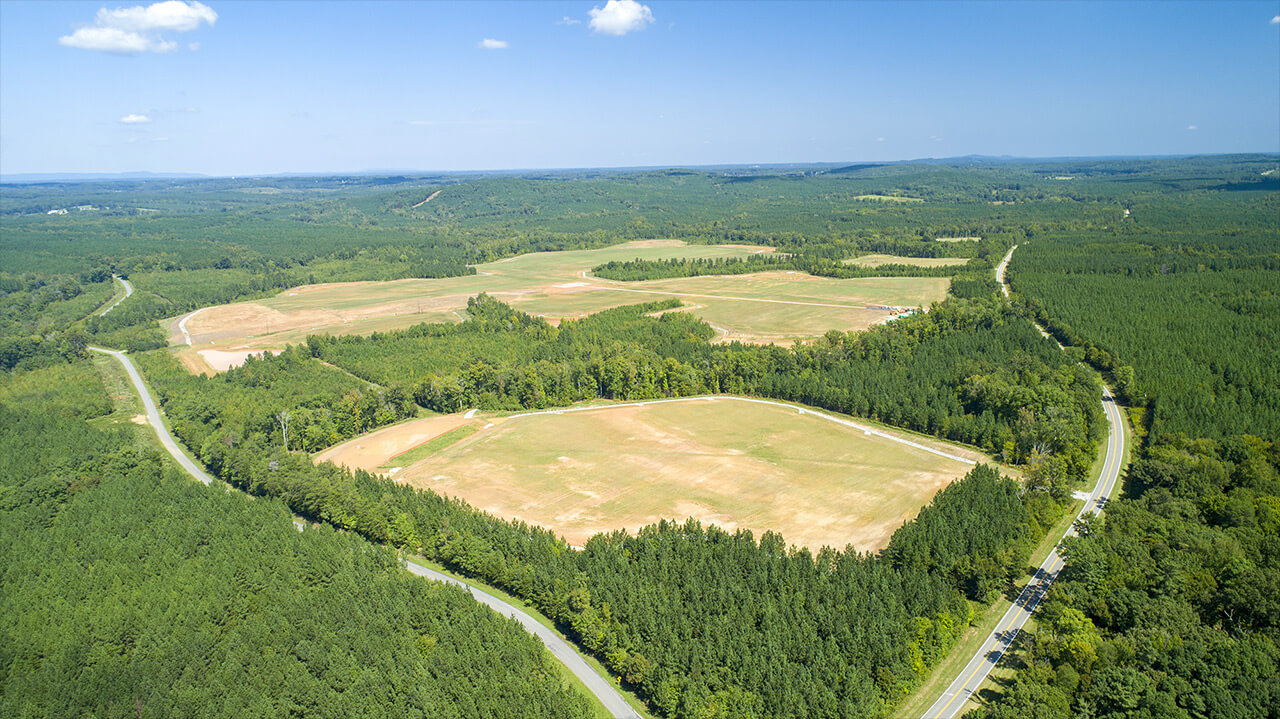
Why it matters
Virginia's new budget keeps Stack Infrastructure's proposed Berry Hill data center campus moving in Pittsylvania County, but the project now sits at the center of a statewide tax, power and community-benefits test.
Virginia's newly finalized budget has kept Stack Infrastructure's proposed data center campus at the Southern Virginia Megasite at Berry Hill alive, turning a threatened tax-policy clash into the next test for one of the largest local economic-development deals in the state. The project in Pittsylvania County is tied to at least $73.5 billion of investment, 2,050 direct jobs and a performance agreement with the Danville-Pittsylvania Regional Industrial Facility Authority, according to public meeting materials and local reporting.
The fresh development is not that Stack wants the site; local officials approved the performance agreement in May. What changed this week is that Virginia lawmakers accepted a budget compromise that preserved the data center equipment sales-tax exemption while creating a statewide electricity consumption tax on data centers, a compromise that Virginia Business reported had been a condition for Stack to keep advancing the Berry Hill plan.
The budget deal reduces one near-term risk, but it does not make the campus a completed project. Stack still has to move through site selection, land-closing, utility and community-benefits steps, and state lawmakers are scheduled to revisit the broader data center tax exemption through a Joint Subcommittee on Tax Policy report due Dec. 15.
What Is Actually Committed
The core local agreement is built around performance metrics, not an already operating campus. Virginia Business reported that Stack would invest at least $73.5 billion at Berry Hill and create at least 2,050 jobs with an $80,500 average annual wage under the agreement. The company has also described a broader plan of roughly $100 billion over three decades and 2,500 jobs over 20 years.
Those numbers matter because Berry Hill has been publicly prepared for years as a large industrial site. The official Southern Virginia Megasite page describes the property as a 3,528-acre publicly owned megasite with rail, natural gas, broadband, water, sewer, permitting and zoning infrastructure in place. A separate AEP-linked property report lists the site at 6100 Berry Hill Road near Danville, with Pittsylvania County as the contact organization and American Electric Power/Appalachian Power tied to electric service in the area.
| Item | Verified detail | Why it matters |
|---|---|---|
| Minimum investment | At least $73.5 billion under performance metrics | Sets the floor for the local agreement rather than the aspirational headline |
| Long-range plan | About $100 billion over three decades | Shows the project would be built in phases, not all at once |
| Direct jobs | At least 2,050 jobs tied to performance metrics | Makes job delivery a measurable checkpoint, not just a promise |
| Site scale | 3,528-acre public megasite; Stack could occupy 2,990 acres if fully built out | Would largely determine the future use of Virginia's largest certified megasite |
| State tax change | $0.011 per kWh data center electricity consumption tax, capped at $600 million per fiscal year | Preserves the equipment exemption while adding a new state revenue claim on power use |
The Real Tradeoff Is Tax Certainty Versus Public Exposure
The second-layer issue for readers is the split between local upside and statewide policy exposure. Danville and Pittsylvania County are pursuing a project that could generate large local tax payments and fill nearly all of the megasite if Stack completes the land purchase. The state, meanwhile, is trying to keep Virginia competitive for data centers while responding to voter and utility-customer pressure over power demand, cost allocation and the value of a long-running equipment tax exemption.
Virginia Business reported that the new consumption tax is expected to raise about $1.2 billion over two years and charges $0.011 per kilowatt-hour used by each data center, with collections capped at $600 million per fiscal year and excess revenue returned to operators. The governor's office separately said the budget includes a first-of-its-kind statewide energy consumption tax on data centers and framed it as part of making high-load users pay more directly for the energy they use.
That structure matters for Berry Hill because earlier proposals to end the data center equipment sales-tax exemption ahead of schedule threatened the economics of the project. Keeping the exemption in place preserves the development path for Stack, but the state has now created a new operating-cost layer and left the broader exemption debate alive for another legislative cycle.
Power, Water And Local Conditions Still Matter
The project also depends on infrastructure that is not just local marketing copy. Earlier reporting on the Berry Hill land sale said the purchase agreement allowed the buyer to back out if Appalachian Power could not confirm that 299 megawatts of power could be provided by the end of 2028. That makes grid capacity a practical checkpoint for whether the proposal moves from agreement to construction.
Water and land-use scrutiny are also part of the record. Virginia Business reported that legislation signed this year created a permit process for high-energy-use facilities consuming 100 megawatts or more, including site assessments for noise near homes and schools within 500 feet, and that another law requires monthly water-utility reporting on volumes provided to data centers. WSLS reported that some nearby residents have raised concerns about groundwater and nearby properties, while local leaders have said the campus would use Dan River water rather than wells.
For Pittsylvania County and Danville, the financing question is whether a publicly assembled megasite can turn years of infrastructure spending into recurring local revenue without pushing unpriced costs onto ratepayers, landowners or future public budgets. The official Megasite page says more than $200 million has been invested in site and infrastructure development; the Stack proposal is the kind of anchor tenant that such a site was built to attract.
What To Watch Next
The next useful checkpoints are concrete. Local officials and Stack are working on a community benefits plan, according to Virginia Business. The land purchase is phased, with earlier reporting saying the first phase must include at least 1,000 acres and that the full 2,990-acre purchase would occupy nearly all of Berry Hill if completed.
Readers should also watch the Dec. 15 tax-policy report, any Appalachian Power confirmation tied to the project's power needs, and local action on equipment-tax treatment. If those pieces hold, the budget compromise may have bought Stack and Southern Virginia a path forward. If they shift, the Berry Hill proposal remains less a finished win than a high-stakes test of how far Virginia wants to extend its data center growth model beyond Northern Virginia.
Sources & further reading
- Danville-Pittsylvania Regional Industrial Facility Authority agenda materials, May 2026City of Danville CivicClerk
- Virginia budget clears way for $100B Berry Hill data center campusVirginia Business
- $100B data center project proposed at Berry Hill megasite advancesVirginia Business
- Governor Spanberger Signs Legislation to Address High Energy Costs & Rejoin RGGIGovernor of Virginia
- Danville, Pittsylvania County leaders approve $100 billion data center investmentWSLS 10
- Southern Virginia Megasite at Berry HillDanville Office of Economic Development & Tourism
- Southern Virginia Megasite at Berry Hill property reportAEP / ZoomProspector
Recommended reads

July Minimum-Wage Raises Give Workers a Clear Paycheck Checkpoint
Alaska, Oregon, the District of Columbia, California health care employers and more than 20 local jurisdictions have July 1 minimum-wage changes. The raises are targeted rather than nationwide, but they give covered workers a concrete pay floor to check and give small employers a practical payroll deadline.
Read analysis
Fannie and Freddie's FICO 10T Data Release Gives Mortgage Fintechs a New Model Test
Fannie Mae and Freddie Mac have released historical FICO Score 10T loan-level data and expanded VantageScore 4.0 files, giving lenders, investors and mortgage technology vendors a way to test newer credit models against past GSE loan performance. The practical market question is whether better model transparency can translate into broader borrower access and lower credit-reporting costs without creating new operational risk for mortgage platforms.
Read analysis