

Port of Los Angeles' $3.37B Budget Raises Capex While Cargo Outlook Cools
The Los Angeles Harbor Commission approved a $3.37 billion FY 2026/27 Port of Los Angeles budget, lifting capital spending even as the port forecasts 9.3 million container units, 7% below the current-year outlook. The useful read is whether rail, road, workforce and clean-truck spending can protect the gateway's competitiveness during a softer trade cycle.
Verified by Kevin Jenkins
Editor reviewed
Signed off by Kevin Jenkins on . AI-assisted tools may have supported the workflow; source quality and factual claims are reviewed as part of editorial control.
Editorial standards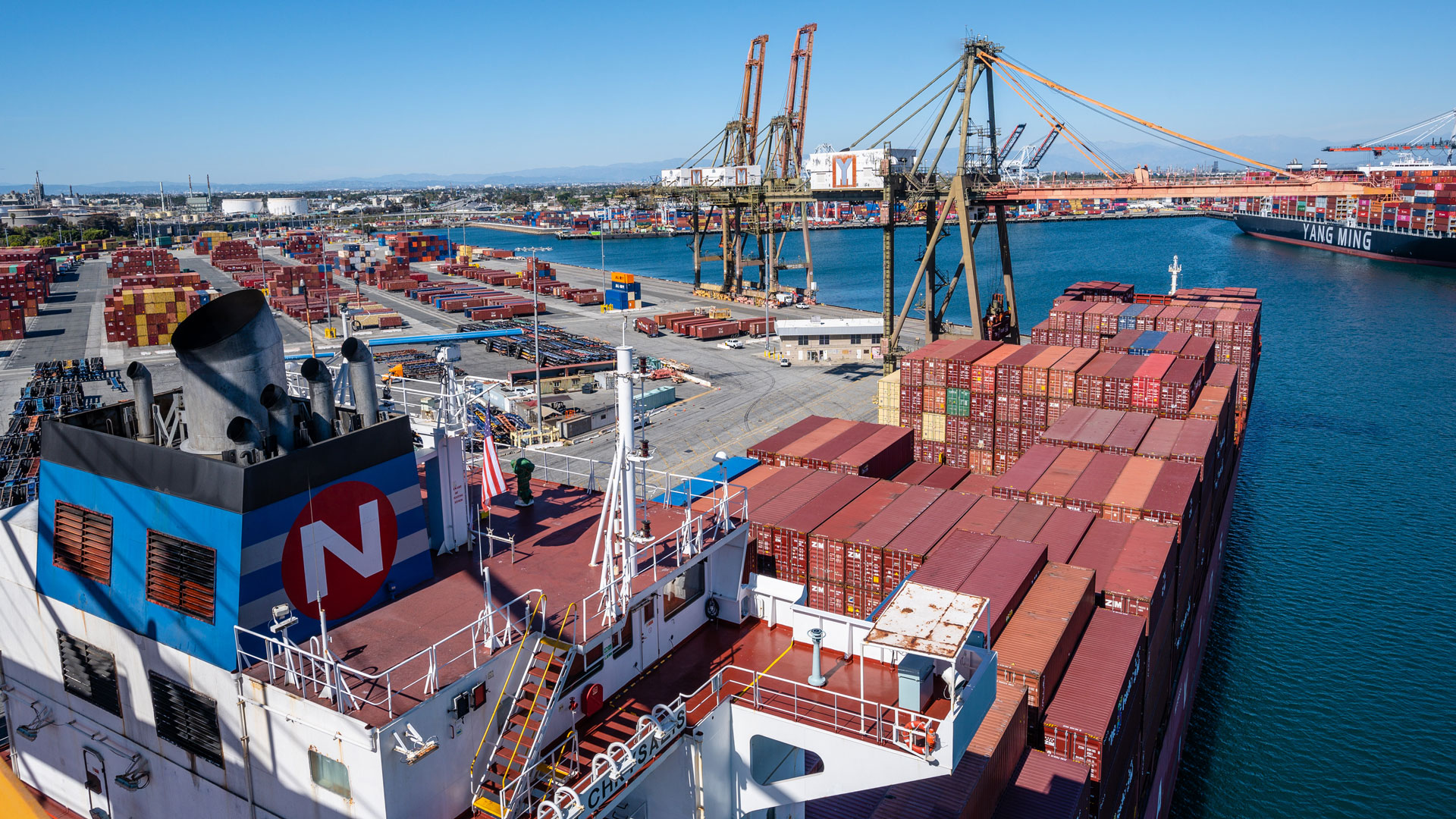
Why it matters
The Los Angeles Harbor Commission approved a $3.37 billion FY 2026/27 Port of Los Angeles budget, lifting capital spending even as the port forecasts 9.3 million container units, 7% below the current-year outlook. The useful read is whether rail, road, workforce and clean-truck spending can protect the gateway's competitiveness during a softer trade cycle.
The Los Angeles Board of Harbor Commissioners has approved a $3.37 billion fiscal 2026/27 budget for the Port of Los Angeles, choosing to raise infrastructure spending even as the nation's largest container gateway expects a cooler cargo year.
Port officials said the adopted budget is built around 9.3 million container units, 7% below the current forecast for fiscal 2025/26, because global trade volatility and trade-policy uncertainty are weighing on the outlook. That makes the budget more than a routine municipal vote: it is a test of whether the port can keep investing through a softer volume cycle without losing sight of costs, clean-truck subsidies and projects that determine how efficiently freight moves in and out of Southern California.
The official June 11 port release and the Harbor Commission agenda put the proposed annual budget at $3,370,437,519. Trade outlets including FreightWaves, Port Technology International and SupplyChainBrain reported the same broad shape: a 25% year-over-year increase, driven mainly by a 31% rise in capital improvement spending and a more cautious cargo forecast.
| Budget marker | Disclosed figure | Why it matters |
|---|---|---|
| Total FY 2026/27 budget | $3.37 billion | Sets the annual spending plan for the city-owned harbor department and its port infrastructure program |
| Year-over-year change | Up 25%, or $665 million | Shows the budget is expanding even as cargo assumptions are more cautious |
| Capital improvement spending | Up 31%; Port Technology and SupplyChainBrain reported $302 million, the highest level in more than a decade | Makes capex the main economic mechanism, not general payroll growth |
| Cargo forecast | 9.3 million container units, 7% below the current FY 2025/26 forecast | Creates the tension in the story: infrastructure spending is rising while volume expectations ease |
| Operating revenues | $826 million, up 26%; shipping services expected to provide 65% | Shows continued dependence on cargo-related revenue streams |
| Operating expenses | About $452 million, up roughly 6% | Cost pressure includes Clean Truck Fund Rate subsidies, wages, benefits and inflation |
Why the capex rise matters
A simple version of this story would say the port approved a bigger budget. The stronger economic point is that Los Angeles is spending into uncertainty. The budget assumes a weaker container count than the current-year forecast, but still pushes money toward terminal modernization, transportation links, public-access projects, technology and workforce facilities.
That is a defensive investment strategy. If cargo volumes remain below the surge years, the port needs to protect margins and market share through faster rail transfers, less truck friction, cleaner equipment incentives and better terminal throughput. If volumes recover, the same investments help prevent the congestion and chassis shortages that made the San Pedro Bay complex a national supply-chain bottleneck earlier in the decade.
The budget documents show why the local stakes extend beyond the docks. The port is owned and operated by the City of Los Angeles through its Harbor Department, so spending decisions flow into construction contracts, rail work, truck programs, workforce training and community-facing waterfront projects. The direct beneficiaries are not only ocean carriers and terminal operators; they include harbor-area contractors, truckers, logistics firms, workers, nearby residents and the public agencies that rely on the port's financial strength.
The projects are the real checkpoint
The most useful way to read the budget is through the projects attached to it. Port Technology International identified signature items including the Avalon Pedestrian Bridge and Promenade Gateway, the Berths 302-305 rail expansion and the SR 47/Vincent Thomas Bridge interchange reconfiguration. SupplyChainBrain reported the rail and interchange projects at roughly $74 million and $130 million, respectively.
The port's own budget materials add project-level context. The Berths 302-305 rail work is described as an on-dock rail expansion adding about 16,200 linear feet of track, five loading tracks and one tail track, with construction expected to run to March 2027. The SR 47/Vincent Thomas Bridge work is designed to reconfigure ramps and access around one of the key road links between Terminal Island, San Pedro and the regional freeway network, with completion expected in November 2026.
Those details matter because the port's competitiveness is not decided only by ship calls. It depends on whether containers can leave terminals quickly by rail or truck, whether road bottlenecks around the bridge and harbor entrances improve, and whether clean-truck subsidies can accelerate equipment turnover without becoming an unchecked expense. The budget's second-layer signal is that Los Angeles is trying to buy resilience in the places where cargo can get stuck.
The risk is revenue discipline
The caution flag is the cargo forecast. The port's April statistics showed year-to-date 2026 container counts down 2.0% from the prior year, while fiscal 2025/26 counts through April were down 3.9%. Those figures do not prove the full 2026/27 forecast, but they explain why management is budgeting around a lower volume assumption rather than treating recent surge years as normal.
FreightWaves added a sharper trade-policy frame, reporting that the San Pedro Bay complex has felt pressure from tariffs and shifting import routing, including more interest in alternatives through Mexico and Canada. That context should be handled carefully: trade flows can change quickly, and the port's official record attributes its cautious outlook to volatility and uncertainty rather than to a single cause. Still, the implication is clear enough for readers: capital projects that improve rail, road and terminal efficiency matter most when shippers have choices.
What to watch next
The first checkpoint is whether monthly container volumes track above or below the 9.3 million-unit assumption once the new fiscal year begins. The port publishes container statistics monthly, usually around the middle of the following month, making the traffic trend unusually easy for readers to monitor.
The second checkpoint is execution on the named projects: rail expansion milestones at Berths 302-305, progress on the SR 47/Vincent Thomas Bridge interchange, and the scale of Clean Truck Fund Rate subsidies over the next 12 months. If those investments stay on schedule while cargo softens only modestly, the budget will look like a timely resilience push. If volumes weaken more sharply or costs keep rising, the same budget becomes a test of how much public port infrastructure Los Angeles can carry through a slower trade cycle.
Sources & further reading
- Los Angeles Harbor Commission Adopts $3.4 Billion Fiscal Year 2026/27 Budget for the Port of Los AngelesPort of Los Angeles
- Harbor Commission Regular Agenda - June 11, 2026Port of Los Angeles
- FY 2026/27 Proposed Annual BudgetPort of Los Angeles
- Port of Los Angeles forecasts 7% container volume declineFreightWaves
- Port of Los Angeles sets $3.4bn budget for record capex pushPort Technology International
- $3.4B PoLA Budget ApprovedSupplyChainBrain
- Container StatisticsPort of Los Angeles
- WBCT - LA TiL Terminal photo downloadPort of Los Angeles
Recommended reads

Small businesses are seeing one labor squeeze ease, but payroll costs take its place
NFIB's May survey shows fewer small firms reporting unfilled jobs and labor-quality problems, a modest relief for hiring, while record labor-cost concern and higher fuel prices keep margins under pressure.
Read analysis
Consumer Spending Is Holding Up, but the Cushion Is Uneven
Bank of America's June Consumer Checkpoint shows May card spending rising at the fastest yearly pace in nearly four years, with lower- and middle-income wage growth improving. The useful read for households and Main Street businesses is steady demand with signs of bargain hunting, not broad relief from high costs.
Read analysis