

Amrize's Saint-Constant Cement Upgrade Tests Quebec's Local Supply Bet
Amrize broke ground on a modernization of its Saint-Constant cement plant outside Montreal, with production capacity set to rise by 300,000 tonnes to 1.2 million tonnes a year. The regional finance angle is whether public decarbonization support and private industrial spending can expand Quebec-made cement supply as the province prepares a decade of infrastructure, transit, health-care and housing work.
Pending review
This article is in WireNorth's review workflow and may include AI-assisted research, drafting, or formatting. Pending articles are not eligible for search indexing until editor review is complete.
Editorial standards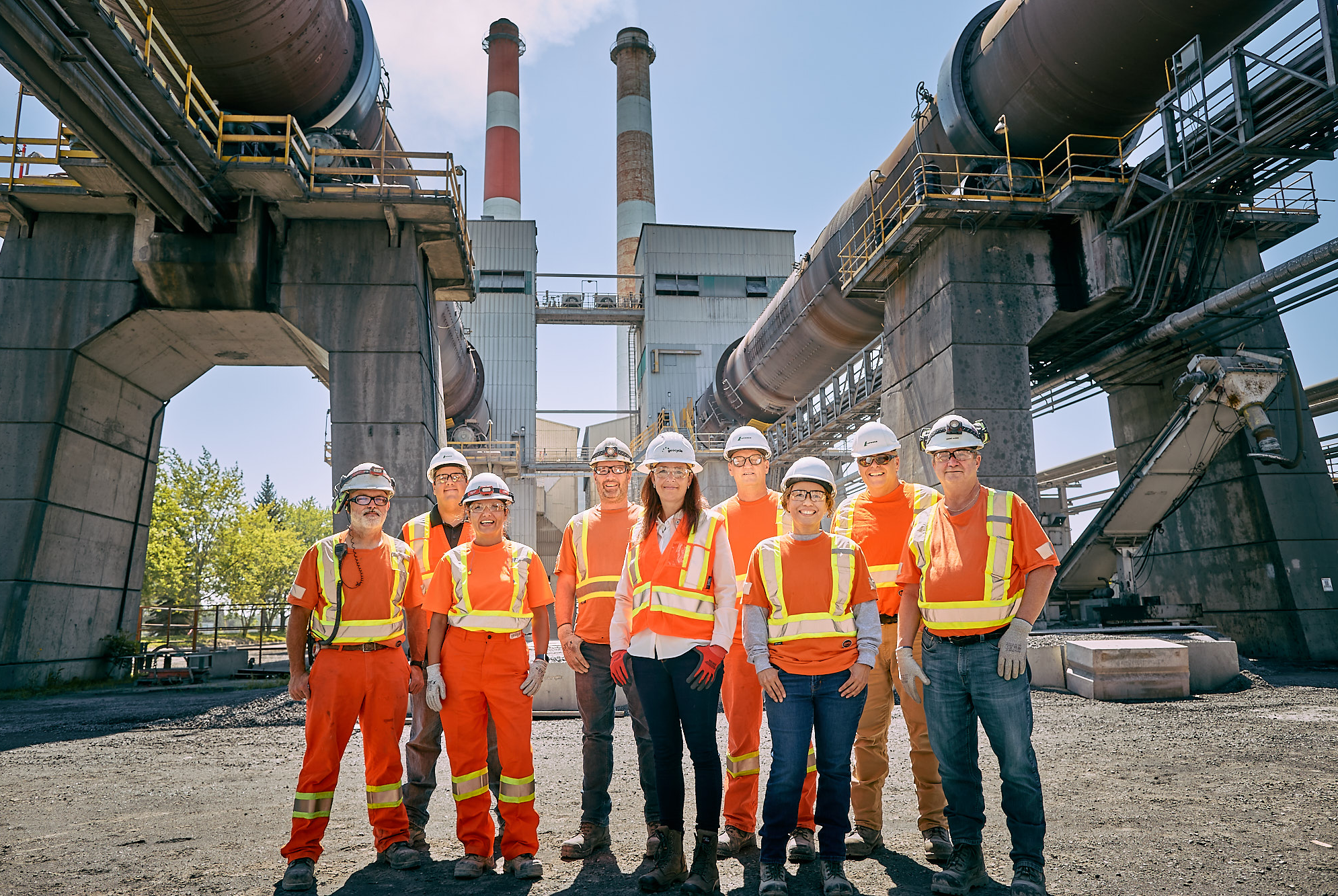
Why it matters
Amrize broke ground on a modernization of its Saint-Constant cement plant outside Montreal, with production capacity set to rise by 300,000 tonnes to 1.2 million tonnes a year. The regional finance angle is whether public decarbonization support and private industrial spending can expand Quebec-made cement supply as the province prepares a decade of infrastructure, transit, health-care and housing work.
Amrize broke ground on a modernization of its Saint-Constant cement plant outside Montreal on June 19, putting a local industrial-supply test behind Quebec's coming infrastructure buildout.
The company said the project will expand the plant's production capacity by 300,000 tonnes to 1.2 million tonnes a year, grow the site workforce by 25%, and improve the plant's net carbon footprint by more than 40% by 2035. Trade outlets including CemNet and Rock to Road also reported the groundbreaking and the project-support structure, while Government of Canada materials show Quebec is slated to receive nearly $10 billion over the next decade through federal infrastructure and transit funding streams.
That makes the Saint-Constant project more useful than a routine plant-upgrade announcement. The economic question is whether public decarbonization programs and private capital spending can add local cement capacity at the same time Quebec is preparing to fund housing-related infrastructure, hospitals, transit and community works that will need large volumes of concrete and cementitious materials.
| Measure | Disclosed figure | Why it matters |
|---|---|---|
| Annual capacity after modernization | 1.2 million tonnes, according to Amrize | Sets a concrete supply marker for Quebec-made cement rather than a vague expansion claim |
| Capacity addition | 300,000 tonnes a year | Shows the project is adding production headroom as infrastructure and construction demand are expected to rise |
| Workforce effect | 25% workforce growth at the plant; Amrize separately describes a 120-person Saint-Constant team | Turns the job claim into a local operating-employment checkpoint rather than only a construction headline |
| Carbon target | More than 40% improvement in net carbon footprint by 2035; up to 26% gross improvement, according to Amrize's footnote | Links the upgrade to industrial decarbonization, not only output growth |
| Public-program support | Canada's Low Carbon Economy Fund, Quebec's EcoPerformance program and MADI are identified as support channels | Public money is part of the economics, but specific plant-level grant amounts were not disclosed in the available record |
| Quebec infrastructure backdrop | Nearly $10 billion over 10 years in federal infrastructure and transit funding for Quebec | Creates the demand-side context for why local cement capacity matters beyond Amrize's balance sheet |
Why local cement supply is the mechanism
Cement is heavy, carbon-intensive and expensive to move over long distances. That gives local production a different economic role from many manufactured goods: supply reliability can affect the cost and timing of bridges, transit work, hospitals, housing-enabling infrastructure and municipal capital projects. Amrize says the Saint-Constant site supplies a significant portion of the cement used in the Greater Montreal area and was originally built to supply Expo 67.
The company is also trying to attach a regional label to the output. From Saint-Constant, Amrize says it plans to offer 'Manufactured in Quebec' cement, meaning raw material sourcing, processing and final manufacturing would be carried out in the province. That claim should be treated as the company's plan, not as proof that all future project procurement will shift to local material. Still, it gives builders and public buyers a clearer way to evaluate whether local-content promises match actual supply.
The second-layer point is that Quebec's infrastructure funding will not only be a question of public budgets. It will also depend on whether regional suppliers can provide materials at scale while facing tighter emissions expectations. A cement plant that adds capacity while lowering emissions intensity sits directly inside that constraint.
Public support is real, but the amount is not disclosed
Amrize said measures to reduce greenhouse-gas emissions at Saint-Constant are supported by the Government of Canada through the Low Carbon Economy Fund, and by Quebec through the EcoPerformance program and the Support Measure for the Decarbonization of the Industrial Sector, known as MADI. CemNet reported the same support channels in its coverage of the groundbreaking.
The available record does not disclose how many dollars those programs are contributing to this plant, and that matters. Without a plant-level public-funding amount, the story should not imply a known subsidy size or a settled public return. What is clear is the structure: public decarbonization programs are being used to help modernize a private industrial asset that is expected to serve a public-infrastructure-heavy market.
That is a narrower and safer claim than saying taxpayers are underwriting the entire upgrade. It also gives readers a useful checkpoint: future provincial or federal disclosures should show whether performance conditions, emissions milestones or repayment terms are attached to the support.
The demand signal comes from Quebec's public works pipeline
The timing is not accidental. A Government of Canada backgrounder dated June 2 says Quebec is expected to receive nearly $10 billion over 10 years through the Build Communities Strong Fund and Canada Public Transit Fund, including $2.66 billion for housing-related and post-secondary infrastructure, $1.01 billion for health infrastructure, $557 million in 2026-27 community-stream funding, and more than $5.7 billion in transit funding.
Those federal figures do not guarantee demand for Amrize or for the Saint-Constant plant specifically. They do, however, show why local cement capacity has regional-finance relevance now. If public works are delayed by materials costs, emissions rules or supply constraints, the bottleneck shows up in municipal budgets and construction schedules rather than in a cement company's announcement.
Amrize's broader Canadian materials page adds context: the company says Canada's cement industry contributes C$5 billion to the economy each year and supports more than 62,000 jobs, citing the Cement Association of Canada. Its own Canadian footprint includes more than 450 sites and roughly 7,500 colleagues. Those figures make Saint-Constant one node in a national materials network, but the plant's direct relevance is local: Greater Montreal infrastructure and Quebec-made cement supply.
What to watch next
The first checkpoint is the modernization schedule and whether Amrize discloses when the added 300,000 tonnes of annual capacity will be fully available. A groundbreaking starts the capital project; it does not prove that builders have new supply yet.
The second checkpoint is workforce conversion. Amrize's 25% growth projection should be measured against actual operating roles at Saint-Constant, not short-term construction activity. If the plant's described 120-person team grows as planned, the local employment effect will be easier to verify.
The third checkpoint is public-program transparency. Specific Low Carbon Economy Fund, EcoPerformance or MADI amounts, conditions and emissions milestones would make it possible to judge whether the public side of the deal is buying lower-carbon industrial capacity or simply helping finance a plant upgrade that would have happened anyway. Until those details are public, the strongest claim is narrower: Saint-Constant has become a local test of whether Quebec can add lower-carbon materials capacity before its infrastructure pipeline strains the market.
Sources & further reading
- Amrize to Modernize Montreal Area Cement Plant to be Most Advanced in Eastern CanadaAmrize
- We Build CanadaAmrize
- Backgrounder: Canada and Quebec forge new partnership to build strong new local infrastructureHousing, Infrastructure and Communities Canada
- Amrize prepares groundbreaking ceremony of the modernisation of its Saint-Constant Cement plantCemNet / International Cement Review
- Amrize plans to make Quebec cement plant most advanced in Eastern CanadaRock to Road
- Amrize Q4 cement sales up 3.6% on year; accelerating demand expected in 2026S&P Global Commodity Insights
Recommended reads

May Retail Sales Give Main Street Shops a Clearer Demand Signal
Official retail sales rose more than expected in May, giving many stores a steadier read on customer demand even as gasoline prices and fading tax refunds limit the relief.
Read analysis
America's Housing Market Is Thawing, but Affordability Is Still Blocking Buyers
Harvard's 2026 State of the Nation's Housing report shows why a modest pickup in home sales has not fixed the affordability problem. Existing-home sales rose in May and pending contracts improved, but prices, mortgage rates, construction costs and record renter cost burdens still leave many households unable to buy or rent comfortably.
Read analysis